
The invisible backpack, revisited
What we now know about vocabulary, background and what schools can do
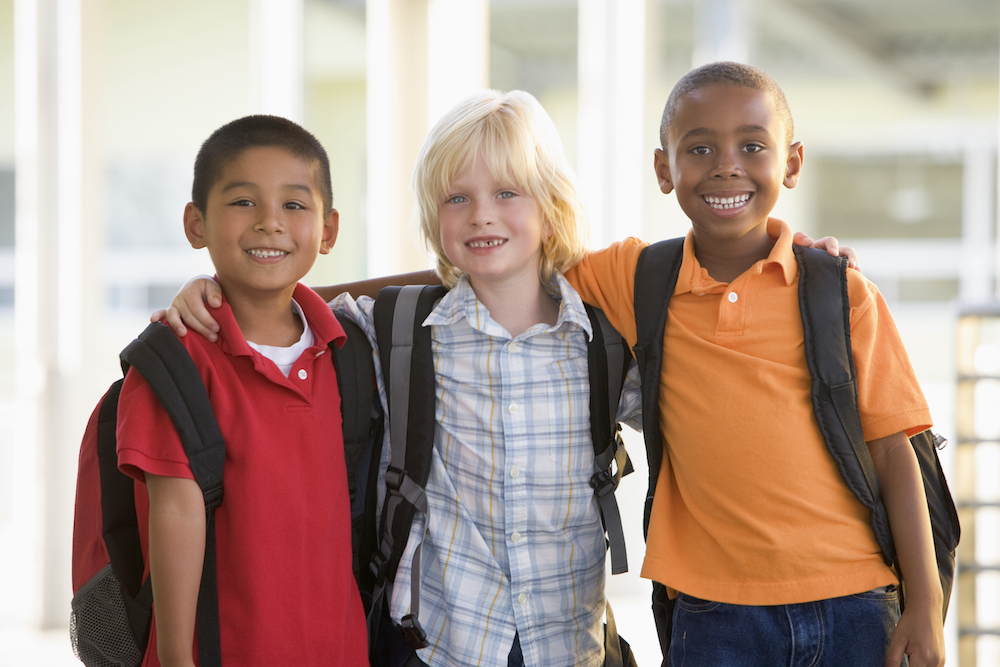
In 2019 I wrote about the invisible backpack. It is the bundle of experiences, stories and words a child carries through the school gate on the first day of Prep. You cannot see it. Teachers feel its weight by about week three.
The idea has held up. Since then, researchers have learned more about what is in the backpack, where the differences come from and, most usefully, what we can do about it.
What we know
- The differences are real, on average. In the early years, children from lower-income families tend to hear fewer words and take part in fewer back-and-forth conversations.
- They show up in Australia. Children in more disadvantaged communities are more likely to start school behind in language.
- They matter later. A child’s vocabulary at school entry is linked to how they go with reading and learning in the years that follow.
But an average is not a child. Researchers recorded more than 1,000 children in 12 countries. The more adult talk children heard, the more they talked themselves.
That study looked at how much children spoke, not how many words they knew, so it does not cancel out the Australian findings. It is a good reminder not to assume what any one child’s home is like.
It is about conversation, not just word counts
The most useful shift in the research is from counting words to looking at conversation.
Researchers found that the number of back-and-forth turns a child took part in was linked to their language scores, whatever the family’s income. Counting words added little once turns were taken into account. Turn-taking in the toddler years also predicted language outcomes years later.
A child spoken at all day is not in the same position as a child spoken with. That is good news for schools, because turn-taking is exactly what a classroom can provide.
What this means for the backpack
I would now describe the backpack differently. It is not empty for some children and full for others. Every child arrives carrying something: family stories, another language, a dialect, a deep knowledge of trains or horses or the creek behind the house.
What differs is how well the contents match what school asks for. School asks for book language, new words and talk about things that are not in the room. Some children have had plenty of practice with this. Others have not yet. That is a gap in practice, not in ability.
It can be taught, and it is best taught early. Children with strong vocabulary get more from every book and lesson, so the gap widens if no one steps in. This is the Matthew effect: the children who start with more gain more.
What helps in the classroom
- Talk that goes back and forth. Ask, wait, then add to what the child says. Aim for more turns, not longer teacher turns.
- Books with talk around them. Read the same book more than once. Pair it with a hands-on activity so new words are attached to something real.
- Teach words on purpose. Choose a few useful words, explain them in child-friendly language, and bring them back through the week.
- Questions at the right level. Marion Blank’s levelled questions move children from naming what they see, to describing, to predicting and explaining. Start where the child is and step up.
- Check, then respond. Screen oral language early so support can match need. Post 5 in this series covers how tiers can do this.
The bottom line
Children do not arrive as blank slates, and they do not arrive equal in school-ready language. But what happens in the first years of school is something we can change, one conversation at a time.
Where this comes from
Differences in home language by family income: Gilkerson, J., et al. (2017). Mapping the early language environment using all-day recordings and automated analysis. American Journal of Speech-Language Pathology, 26(2), 248–265. https://doi.org/10.1044/2016_AJSLP-15-0169
More than 1,000 children in 12 countries: Bergelson, E., et al. (2023). Everyday language input and production in 1,001 children from six continents. PNAS. https://doi.org/10.1073/pnas.2300671120
Conversational turns and brain function: Romeo, R. R., et al. (2018). Beyond the 30-million-word gap: Children’s conversational exposure is associated with language-related brain function. Psychological Science.
Conversational turns and later outcomes: Gilkerson, J., et al. (2018). Language experience in the second year of life and language outcomes in late childhood. Pediatrics.
Australian data: Taylor, C. L., et al. (2013), Longitudinal Study of Australian Children and the Australian Early Development Census
Want more?
Check out our series
The Language House: Why Reading Starts Long Before Prep
The Matthew Effect in Reading: Why Early Reading Matters So Much
What to Teach in Literacy: The Key Elements and How to Teach Them
What is your school already doing well? A literacy audit
Multi-tiered Support: Keeping Literacy Support Targeted
Implementing literacy change in schools: deciding what is in and what is out